
Dear Leaders,
Embarking on a leadership journey is an exciting endeavor, and laying the foundation for success begins with a meticulous, data-driven approach.
As an experienced leader, I’m thrilled to guide you through the intricacies of problem-solving for continuous improvement and transformative endeavors, emphasizing the power of evidence and a deep understanding of the roots of the problem to be solved.
Leadership development, personal growth, and success overallare thrilling endeavors, and I’m here to walk you through a clear and practical recipe for success applicable in any field and in your personal life.
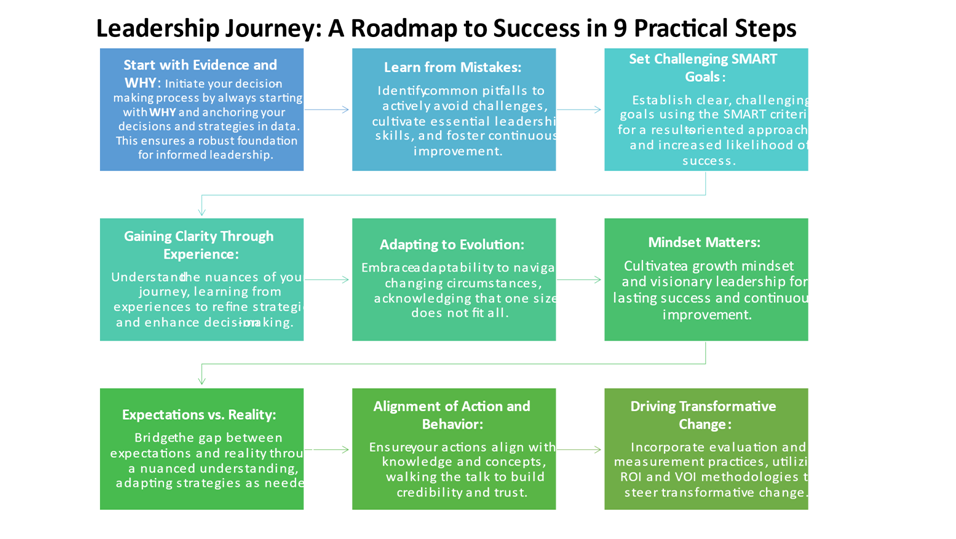
Our approach places a fundamental emphasis on consistently asking the question “WHY”. This intentional focus on understanding the rationale behind your actions serves as a foundational and crucial step for achieving success in your endeavors.
When we pose the “WHY” question, we are essentially prompting a conscious exploration of the rational and purposeful aspects of your project or initiative.This deliberate inquiry into the “WHY” is not merely a formality but a strategic move to bring clarity to the forefront. It prompts a thoughtful engagement with the reasons, goals, and underlying motivations driving your actions.
This process of questioning and understanding the core motivations behind your endeavors establishes a solid foundation for informed decision-making and strategic planning. It aligns your actions with a clear sense of purpose, fostering a more intentional and directed path toward success.
Following the exploration of the “WHY” question, our approach involves a critical examination of COMMON MISTAKES that often capture leaders and contribute to their lack of success. This phase is crucial because it allows us to identify and understand the pitfalls that many unsuccessful leaders fall into.
In this context, “Common Mistakes” refers to recurring errors or missteps that hinder effective leadership and impede the achievement of goals. These mistakes may range from poor decision-making and communication breakdowns to a lack of adaptability or failure to learn from past experiences.
By shining a light on these common pitfalls, our approach aims to provide leaders with valuable insights into the challenges they might face.The goal is not to criticize or dwell on shortcomings but to empower leaders with awareness.
By understanding these common mistakes, Leaders can actively avoid potential pitfalls through proactive navigation, make more informed decisions, and cultivate the skills necessary for effective leadership.
This awareness fosters a culture of continuous improvement, encouraging leaders to learn from the experiences of others and develop resilience in the face of challenges.
In essence, this phase serves as a diagnostic tool, enabling leaders to refine their strategies and enhance their leadership capabilities.
When we advise to “Avoid setting vague goals; and set a clear direction,” we emphasize the importance of precision and CLARITY IN GOAL-SETTING to enhance the likelihood of success.
Vague goals lack specificity and fail to provide a clear roadmap for action. When goals are vague, it becomes challenging to understand what needs to be achieved and how success will be measured.
Vagueness can lead to confusion, frustration, and a lack of motivation among team members, as they may not grasp the precise objectives they are working towards.In contrast, setting a clear direction involves articulating goals with precision and ensuring they are easily comprehensible.
Clear goals outline the desired outcomes, the steps required to achieve them, and the criteria for success.
This clarity fosters a shared understanding among team members, aligning efforts toward a common purpose.
When the direction is clear, individuals can more effectively contribute to the overall success of the initiative.
In summary, steering away from vague goals and establishing a clear direction is foundational for effective goal setting. It sets the stage for focused and purposeful action, reducing ambiguity and increasing the likelihood of achieving meaningful outcomes.
Moving forward in our approach involves a shift to a proactive mindset by delving into SOLUTIONS. Here, we focus on crafting goals that adhere to the SMART criteria and implementing a systematic process of regular progress assessment.
Defining SMART GOALS:Solutions begin with the formulation of SMART goals; Specific, Measurable, Achievable, Relevant, and Time-Bound. This strategic framework ensures that goals are clear, quantifiable, attainable, aligned with broader objectives, and bound by a well-defined timeline.
By adhering to these criteria, we establish a solid foundation for effective goal setting that is both meaningful and actionable.Implementation is not a one-time event but a continuous process. Regular assessment of progress is essential to track advancements, identify potential challenges, and ensure alignment with the established SMART goals.
This involves consistent monitoring, analysis, and reflection on the journey toward achieving objectives.
Periodic evaluations provide valuable insights, enabling leaders to make informed decisions, realign strategies if necessary, and celebrate successes along the way.
In essence, the focus on SOLUTIONS encourages a results-oriented approach by setting clear and attainable goals and establishing a robust system for ongoing evaluation.
This proactive stance enhances the likelihood of success by promoting adaptability, accountability, and a structured path toward realizing your objectives.
The advice to “TAILOR YOUR SOLUTION TO YOUR CONTEXT; one size does not fit all” underscores the importance of customization and adaptability in problem-solving and decision-making.
This implies that solutions should be crafted with a keen awareness of the specific circumstances, challenges, and dynamics of the context in which they will be applied.
Instead of adopting a one-size-fits-all approach, where a uniform solution is applied to various situations indiscriminately, tailoring involves a thoughtful and nuanced adjustment of strategies to suit the unique characteristics of the given context.
Recognizing that emphasizes the understanding that different situations require different approaches. What may work effectively in one context might not be suitable or optimal in another.
This acknowledgment rejects the notion of universal solutions and encourages a more flexible and responsive mindset when addressing challenges.
By tailoring solutions to the specific context, individuals and organizations can leverage the nuances of their environment, capitalize on strengths, and navigate challenges more effectively. This approach enhances the likelihood of success by acknowledging and adapting to the unique factors influencing a particular situation.
The directive to “ADAPT your strategies to your unique circumstances” emphasizes the importance of flexibility, responsiveness, and agility in the face of changing environments or conditions.
This implies an active and intentional approach to modifying strategies based on the evolving nature of the circumstances. Rather than adhering rigidly to a predetermined plan, individuals and organizations are encouraged to assess the current situation, identify relevant changes, and adjust their strategies accordingly.
The use of “unique circumstances” underscores the understanding that every situation is distinct.
Factors such as external influences, internal dynamics, and unforeseen variables can significantly impact the effectiveness of a strategy.
By adapting strategies to fit the specific attributes of the circumstances at hand, individuals can better address challenges and capitalize on opportunities in a way that aligns with the nuances of their environment.
This emphasis on adaptation encourages a dynamic and responsive mindset, fostering the ability to navigate complexity and uncertainty with resilience and effectiveness.
Ultimately, the ability to adapt strategies to unique circumstances enhances the likelihood of achieving success in a constantly changing landscape.
The guidance to “Continuously tailor your approaches, and CONSISTENTLY EVALUATE their effectiveness” underscores the iterative and dynamic nature of problem-solving and decision-making processes.
This suggests an ongoing, proactive effort to refine and adjust your approaches based on the changing dynamics of your environment. Rather than adopting a static or rigid strategy, continuously tailoring your approaches involves staying attuned to shifts in circumstances, feedback from stakeholders, or emerging trends.
This adaptive mindset ensures that your methods remain relevant and effective amid evolving conditions.
This emphasizes the need for regular and systematic assessment of the impact of your approaches.
Evaluation involves measuring outcomes against predefined goals, analyzing data, and soliciting feedback.
Regular assessments provide insights into what is working well, what can be improved, and whether adjustments are necessary to enhance overall effectiveness.
In essence, this guidance promotes a cycle of continuous improvement.
By continually tailoring approaches, you align strategies with the ever-changing context, while consistent evaluation ensures that your efforts are informed, intentional, and optimized for success. This iterative process contributes to a more agile and resilient approach to problem-solving and decision-making.
Key Takeaways:
Conclusion
Embarking on a leadership journey is a thrilling endeavor, and success requires a meticulous, data-driven approach.
This newsletter serves as a comprehensive guide, offering insights and practical approaches applicable in any field and personal life.
Embrace these principles, cultivate a mindset of continuous improvement, and stay tuned for more in-depth dive into theses leadership practices in our upcoming newsletters.
Wishing you continued success and growth on your leadership path.
Sincerely,